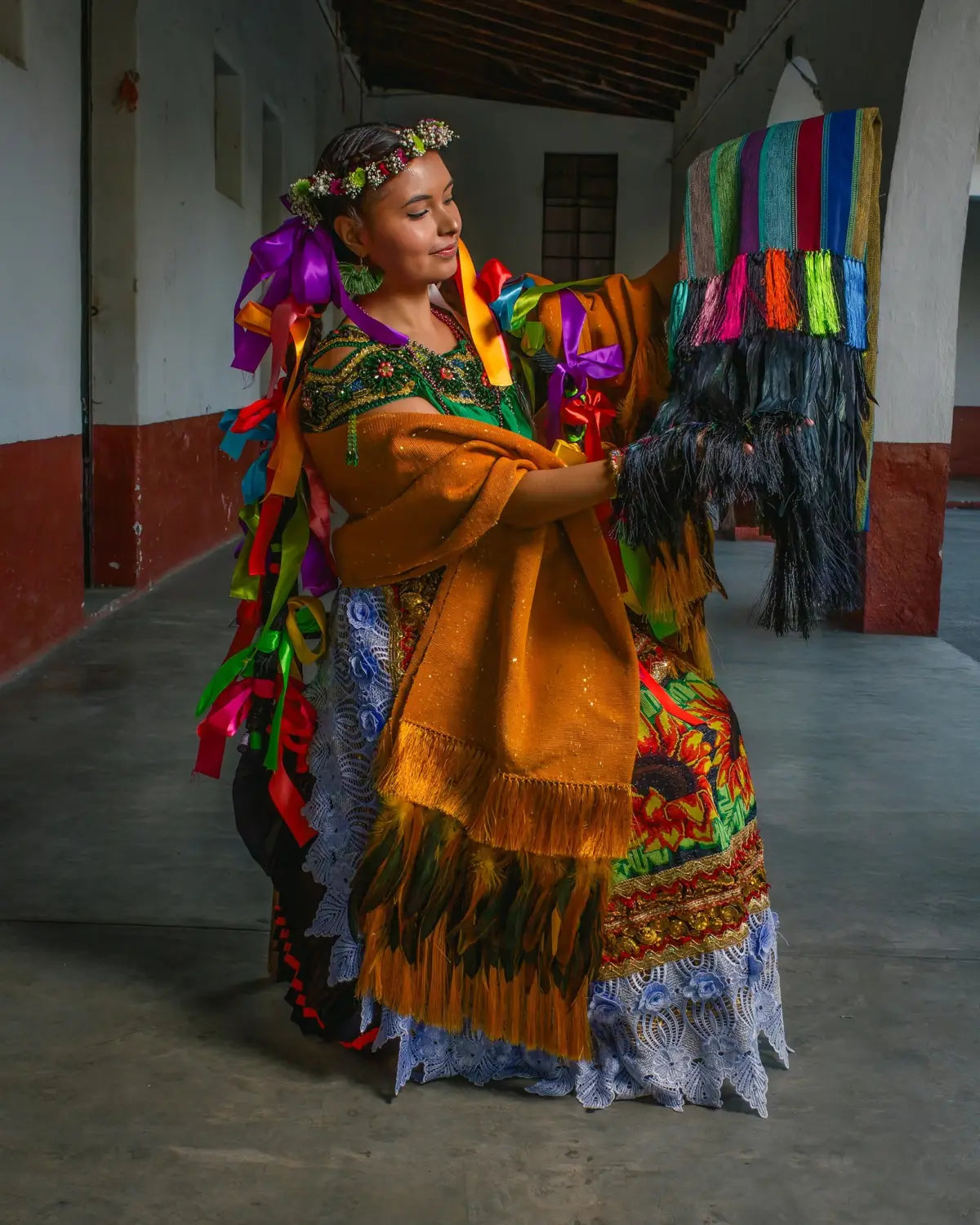


Purepecha Rebozo from Michoacán
The PurépechaThe Purepecha Rebozo of Michoacán: A Living Textile Tradition
The Michoacán Purépecha rebozo is far more than a beautiful Mexican shawl. Woven by artisans in the Purépecha region of Michoacán, it carries knowledge, personal expression, and a textile tradition that remains part of daily and ceremonial life.
The Purepecha Rebozo from Michoacán
Across Mexico, the rebozo is a staple. In Purépecha communities, however, it also has a deeper cultural role: it is associated with identity, femininity, social customs, and the enduring presence of Indigenous dress.[2][3]
For many Purépecha women, the rebozo is a garment of everyday use as well as an object tied to ritual, dignity, and connection to community. Its meaning is not fixed in a museum display; it continues through the people who weave, wear, gift, and care for it
From Michoacán’s Highlands
Purépecha communities are centered in Michoacán, including areas around Lake Pátzcuaro and the Meseta Purépecha, or Purépecha highlands. Textile knowledge in these communities is often passed between generations, preserving patterns, techniques, and ways of understanding clothing as collective memory. In the village of Ahuirán, for example, women are known for hand-weaving rebozos on the backstrap loom—a method in which the weaver controls tension with her own body. This direct, physical process produces cloth with a character and irregular beauty that industrial production cannot replicate.
How the Purepecha Rebozo from Michoacán is made
Traditional Purépecha rebozos are commonly woven from cotton, and may be finished with rayon, silk, or decorative fringe depending on the maker and style. A backstrap-woven rebozo may require about a month of work, reflecting the time involved in preparing threads, weaving the cloth, and completing the ends by hand. Look closely at the ends of a rebozo: the fringe is not merely an accessory. Hand-finished fringe, sometimes described as “flowers,” can be among the most visually striking elements of the piece. Other Purépecha rebozos also feature feathers, adding texture and movement to the garment. The feathers come from domestically raised birds.
Color, Weight, and Design
The Purépecha rebozos from Michoacán are often recognized for their substantial cotton weave and strong visual presence. In Ahuirán, traditional examples have included black grounds with blue and white pinstripes, 3 contemporary artisans also create vivid color combinations and use rayon accents for sheen.
Every artisan and community may have its own preferences in color, texture, and finishing. That variety is part of what makes handmade rebozos meaningful: no two pieces carry exactly the same balance of thread, pattern, color, and handwork.
A Textile With Purpose
A handmade rebozo can be worn over the shoulders, wrapped around the shoulders, or used as a practical textile in daily life. Yet its value goes beyond versatility. It represents the skill of the woman who made it and the continuity of a regional tradition that has adapted while retaining its Indigenous roots.
Choosing a handmade Purépecha rebozo means choosing a piece with a maker, a place, and a story. It is an opportunity to support living craft traditions in Michoacán while bringing a timeless Mexican textile into your own wardrobe.
A genuine handmade rebozo will cost more than a factory-made wrap because the price reflects skilled labor, materials, and the many hours required to create it. These Purépecha rebozos are made by women who learn the technique from their mothers and the tradition is passed on through generations. This is a woman’s run business.
Discover the artistry of the Purépecha rebozo from Michoacán—handwoven cotton shawls rich in Indigenous tradition, color, craftsmanship, and everyday beauty.